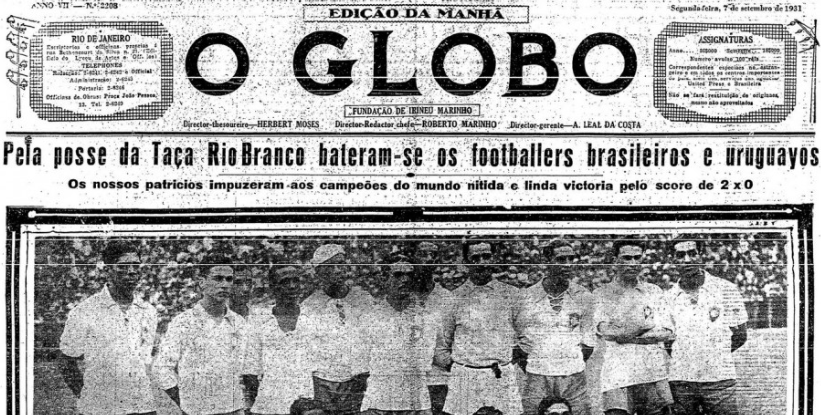
The Copa Río Branco was a now-defunct international football tournament that symbolized one of South America’s most traditional rivalries. You can visit the 1x Nepal website in order to bet on other huge rivalries from the football world.
It was played intermittently between 1931 and 1976, and the 2 contenders were Uruguay and Brazil. This competition brought together the national teams of both countries in a series of matches that reflected not only sporting ambition but also regional prestige and diplomatic ties. South American football can be enjoyed in a great manner by becoming a member of the Nepal 1x Bet platform.
The tournament was first held in 1931 in Rio de Janeiro, marking the beginning of a recurring contest between 2 footballing powers. At the time, international competitions in South America were limited, so bilateral cups like this one played an important role in maintaining competitive fixtures. Over the decades, matches were staged in iconic venues such as the Estádio Centenario in Montevideo and major Brazilian stadiums like Pacaembu and São Januário.
Unlike modern tournaments with fixed schedules and formats, the Copa Río Branco was irregular in both frequency and structure. It had various formats, such as:
- just 1 match;
- it was also played over 2 legs;
- and it even had some additional playoff games.
This variability reflected the evolving nature of international football organization in the mid-20th century.
A competition that also had a shared title
In total, the competition was held 10 times. Brazil emerged as the most successful side, winning 7 titles, while Uruguay secured 4, with 1 edition in 1967 ending in a shared championship after a series of draws. These encounters often mirrored the intensity seen in larger tournaments, especially given the historical rivalry between the 2 nations, which had already produced memorable moments such as the 1950 World Cup final.
The Copa Río Branco also had a symbolic dimension beyond sport. Named after the Brazilian diplomat Baron of Rio Branco, it represented a gesture of friendship and competition between neighboring countries. Similar bilateral tournaments existed in the region, such as the Copa Roca between Brazil and Argentina, highlighting how football served as both a competitive and diplomatic tool.
Despite its historical significance, the tournament gradually lost relevance as international football calendars became more structured and global competitions like the Copa América gained prominence. The final edition took place in 1976, after which the Copa Río Branco was discontinued.